

When I was almost twelve, I nearly died.
A 108-degree fever overtook my body, along with boils covering my skin. My family stood helpless, praying and watching. I was surrounded by attention, urgency, and care.
Years later, I experienced a different kind of suffering. Quieter. Less visible. The kind that leaves you feeling unseen.
Somehow, I have been both the girl everyone feared losing and the woman no one noticed.
And in Luke 8, Jesus meets them both.
A synagogue leader named Jairus falls at Jesus’ feet. His twelve-year-old daughter is dying. The need is urgent and impossible to ignore. Jesus immediately goes with him.
But on the way, He is interrupted.
A woman who has been bleeding for twelve years reaches through the crowd to touch His garment. She is unnamed, isolated, and considered unclean.
Two daughters.
Two desperate stories.
One visible. One hidden.
And Jesus refuses to choose between them.
The woman does not ask to be seen. She has learned how to live unnoticed. So she does not call out. She simply reaches. Immediately, she is healed.
But Jesus stops.
In the middle of urgency, He turns and asks, “Who touched me?” (Luke 8:45)
Jesus is not only interested in healing her body. He is restoring her as a person.
Then He calls her “Daughter” (Luke 8:45).
In a culture that excluded her, Jesus gives her belonging.
He does not define her by her condition.
He restores her identity.
While Jesus is still speaking, news arrives: Jairus’ daughter has died. Every second had mattered. And still, Jesus stopped.
He does not rank pain and does not rank your pain either.
He holds both stories at once, the woman who waited twelve years and the father who feels he has run out of time.
Then He says, “Don’t be afraid” (Luke 8:50).
Before the miracle, He steadies the heart.
When Jesus arrives at Jairus’ home, the space is filled with grief and noise.
He removes the crowd.
He creates a smaller, safer space.
Then He takes the girl by the hand and says, “My child, get up!” (Luke 8:54)
Not loudly. Not dramatically. Just personally.
When life returns, He tells them to give her something to eat. Jesus does not just restore her life. He restores her body, her environment, and her place in her family.
Healing is not only spiritual. It is physical, relational, and deeply human.
In this story, Jesus shows us a different way to care for people, one that feels especially important in a world more aware of mental and emotional health than ever.
- He notices the unseen.
- He restores identity before giving direction.
- He does not rank or rush pain.
- He speaks peace into fear.
- He creates safe spaces.
- He cares for the whole person.
This is not just how Jesus loved then. It is how He loves you now.
I have lived inside both of these stories.
I have been the girl surrounded by urgent prayer and visible need. And I have been the woman carrying quiet pain, harder to name and easier to overlook.
Jesus did not meet one version of me with more care than the other.
He was not more present when the room was full.
He was not less attentive when the pain was hidden.
He noticed.
He named.
He stayed.
In a world that often moves past suffering too quickly, this matters.
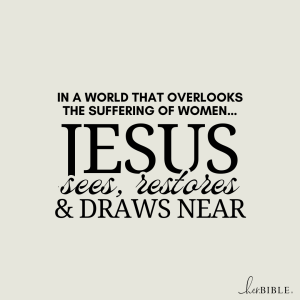
Jesus does not. He sees. He restores dignity.
He draws near.
So whether your pain feels overwhelming or invisible, He sees you.
And as we follow Him, may we begin to reflect Him:
- To notice the overlooked.
- To slow down enough to offer presence instead of solutions.
- To honor stories that are easy to miss.
And perhaps, most gently, to allow ourselves to be seen and restored, too.
*For Deeper Reflection, listen to Luke 8 today
- Luke 8