

When can we come to a new understanding of our loved one’s journey through addiction and into recovery?
In Finding My Way Home, Henri Nouwen references a story about a rabbi who asks a question of his students: “How can we determine the hour of dawn, when the night ends and the day begins?”
His students offered their guesses.
“When from a distance you can distinguish between a dog and a sheep?”
The rabbi replied, “No.”
“Is it when one can distinguish between a fig tree and a grapevine?”
Again the teacher replied, “No.”
The students begged for the rabbi to share the correct answer. My guess is they were beginning to suspect the question was leading somewhere deeper than they expected.
Finally the teacher said, “When you can look into the face of another human being and you have enough light in you to recognize your brother or your sister. Until then it is night, and darkness is still with us.”
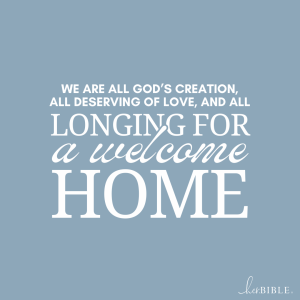 Perhaps dawn begins when we stop believing the lie that “I am not like you.”
When we can look at our loved one—and at ourselves—with compassion. When we recognize that we can move from darkness into light.
When we remember that we are all God’s creation, all deserving of love, and all longing for a welcome home.
From that place, we can begin to use the tools and skills we’ve learned to build trust, foster safety, and meet our loved ones with compassion and empathy.
A new light begins to shine into the night. My hope is that you will recognize that light when you look at your loved one.
Your loved one may be in abstinence-based recovery for decades, practicing harm reduction, or just beginning to consider change. Wherever they are on that journey, what helps most is they know you are there.
With boundaries, yes.
Saying no at times, yes.
Distancing with love when they are using, perhaps.
But with an open heart, yes.
Believing in hope, yes.
Trusting that change is coming, always.
Knowing that just your love and acceptance can make a difference, absolutely.
At its heart, recovery is hope, wellness, community, and giving back.
First, hope is the foundation of recovery, both for those in recovery and for the loved ones walking alongside them.
Believing in healing and transformation increases the chances of long-term recovery. Understanding the neuroscience of addiction can also reduce stigma and help us better understand the many pathways of recovery.
Second, recovery goes beyond abstinence. It is overall well-being. Physical, emotional, and spiritual health play key roles in long-term healing.
Many of us in recovery find that improving physical health strengthens our resilience. Addressing our mental health leads to greater quality of life. And growing in our spiritual health can help us deepen our faith. True wellness involves a holistic approach that nurtures the mind, body, and spirit.
Third, recovery is not a solo journey—it thrives in connection. Support groups, faith communities, and advocacy opportunities and networks can create a supportive family where healing flourishes. Openly sharing recovery stories encourages others to seek help. A strong community helps everyone, including affected family members, navigate the recovery process together.
Fourth, purpose is central to sustained recovery. Supporting loved ones in finding meaning—through volunteer work, advocacy, or creative outlets—strengthens our healing journey and can have long-term and lasting positive health effects.
Finally, many of us in recovery become leaders who serve and give back. We are committed to living lives of meaning and purpose, sharing our stories and creating spaces for others to heal.
You, dear reader, can be a part of this journey of recovery.
Recovery invites us onto pathways that turn darkness into light.
And what a beautiful thing it is to witness when that light returns.
When the road of recovery leads us home to ourselves, to our families, and to community.
I’ve experienced it.
My family is experiencing it.
Millions of families around the globe are living in recovery. My hope for you is that you and your loved one can too. Let us believe until it is true and then always hang on to hope.
As my friends in recovery like to say, “Don’t give up before the miracle happens.”
“Dear friends, let us continue to love one another, for love comes from God. Anyone who loves is a child of God and knows God” (1 John 4:7).
Adapted from When You Love Someone in Recovery by Caroline Beidler. Copyright © 2026 by Caroline Beidler. Used by permission of Thomas Nelson. On Sale April 7, 2026. HarperCollinsChristian.com
For Deeper Reflection, listen to 1 John 1 Today!
- 1 John 1
Be equipped with Caroline on the her STORY Podcast!